For high school and college teachers
Keep the paper.
Lose the grading.
Students write by hand. You photograph the stack. Scores come back as suggestions you approve.
Free for paper quizzes. No student accounts.
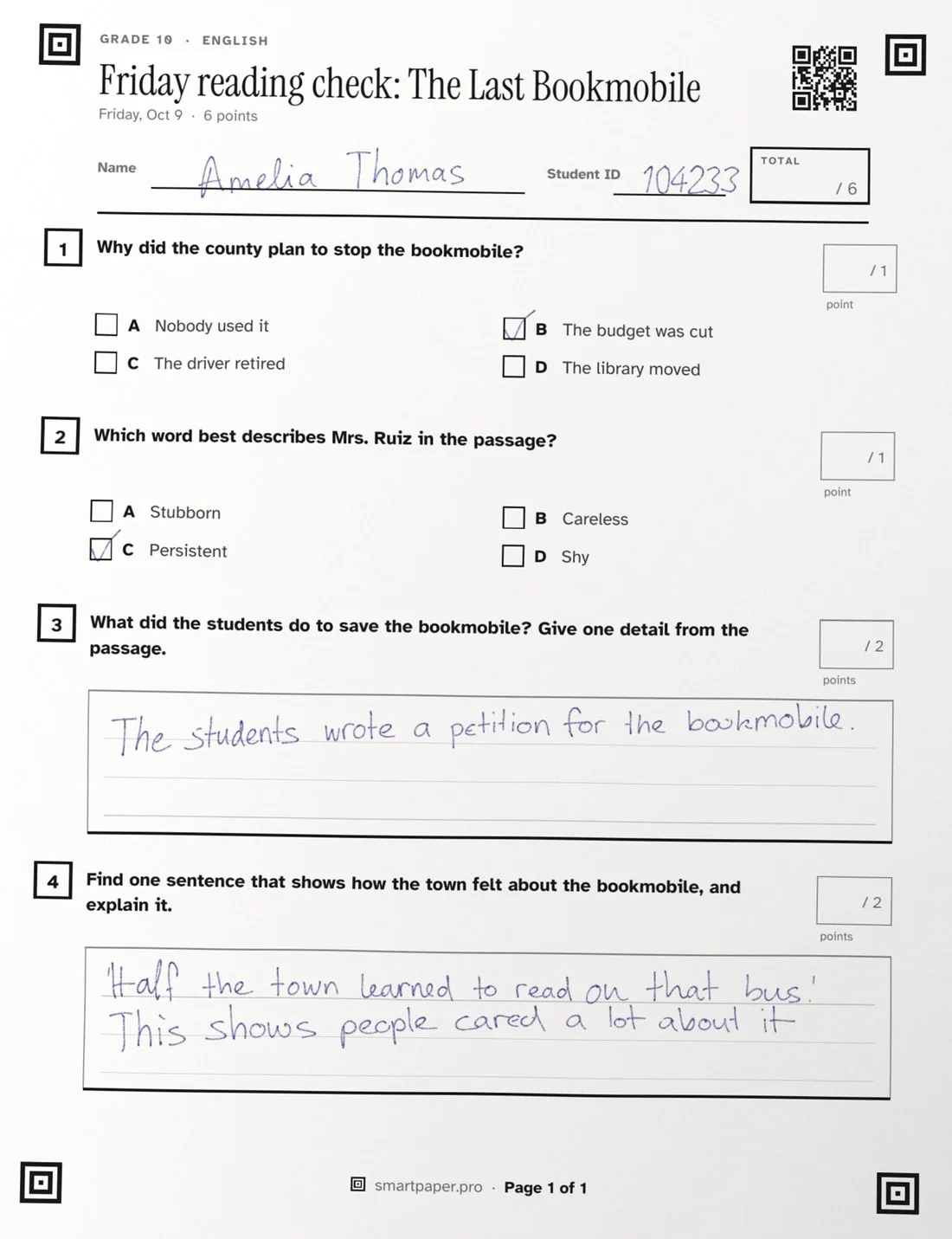
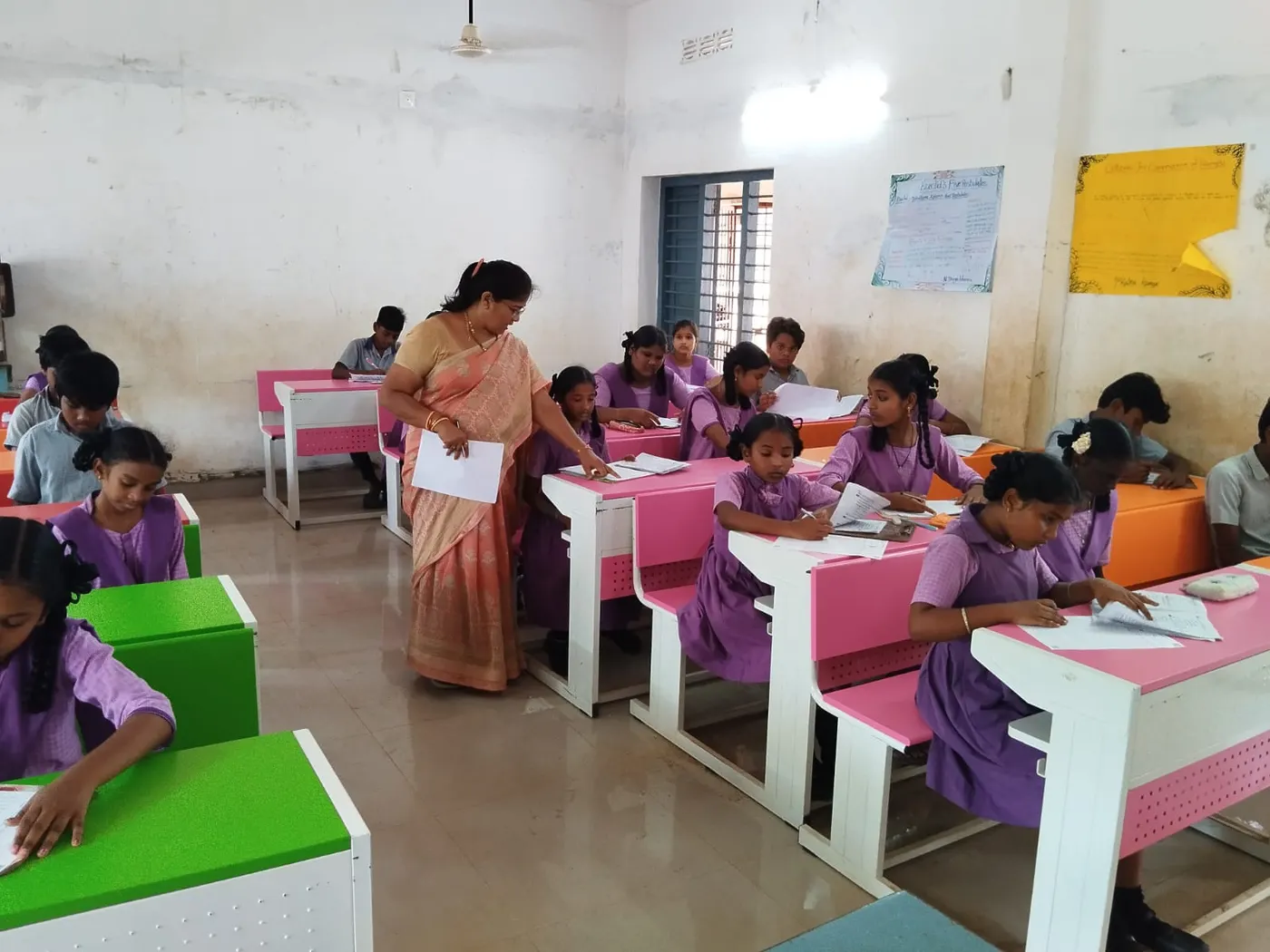
Proven at the scale of a state
The same technology already reads the paper of a whole state in India.
Recognized by




Why paper, now
Paper is a choice again.
Students have laptops. Teachers are moving quizzes back to paper anyway.
Handwriting can't be pasted.
What a student writes in class, in their own hand, is theirs. We make it as quick to grade as a form.
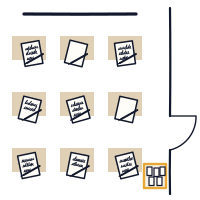
No screens for students.
No accounts, no logins, no devices in the room. Students write. The app is yours.
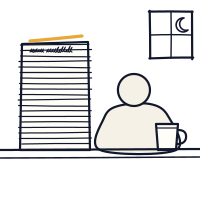
Grading is what wears you down.
Thirty papers, the same comment thirty times. Now a suggestion you accept with a tap. The judgement stays yours.
How it works
Three moments in your week.
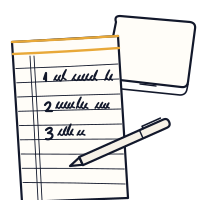 1
Make the quiz.
Laptop. Sunday night. Twenty minutes.
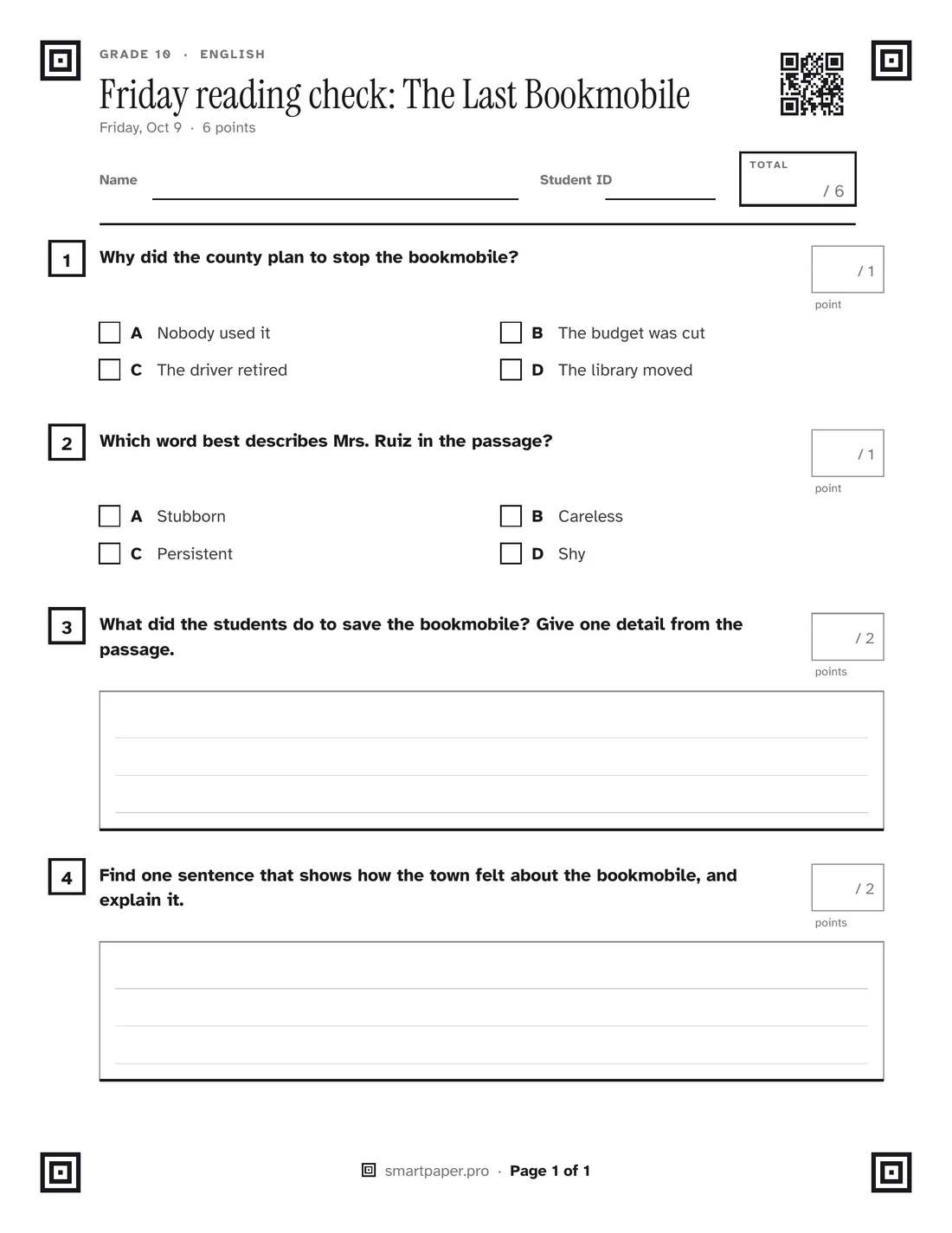
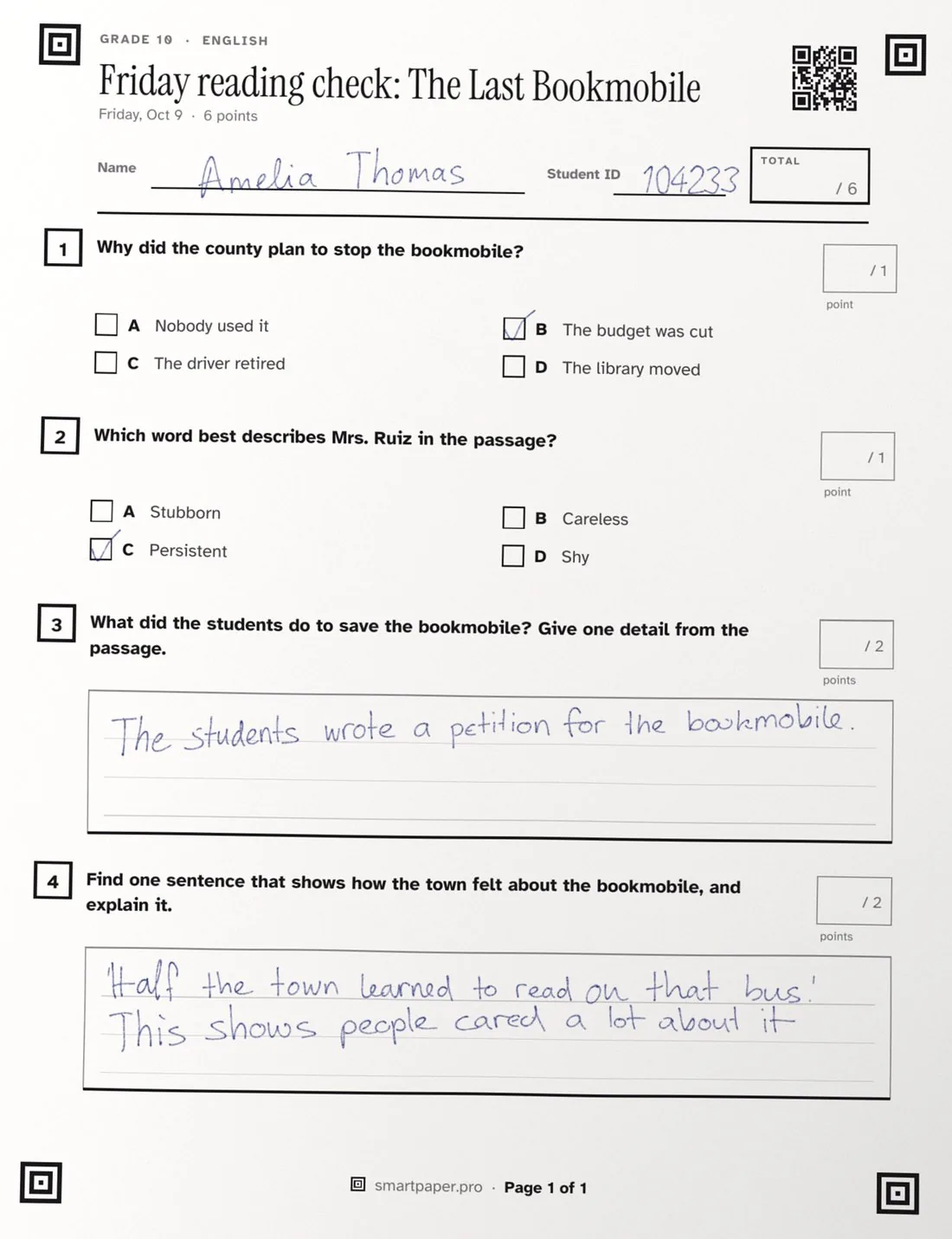
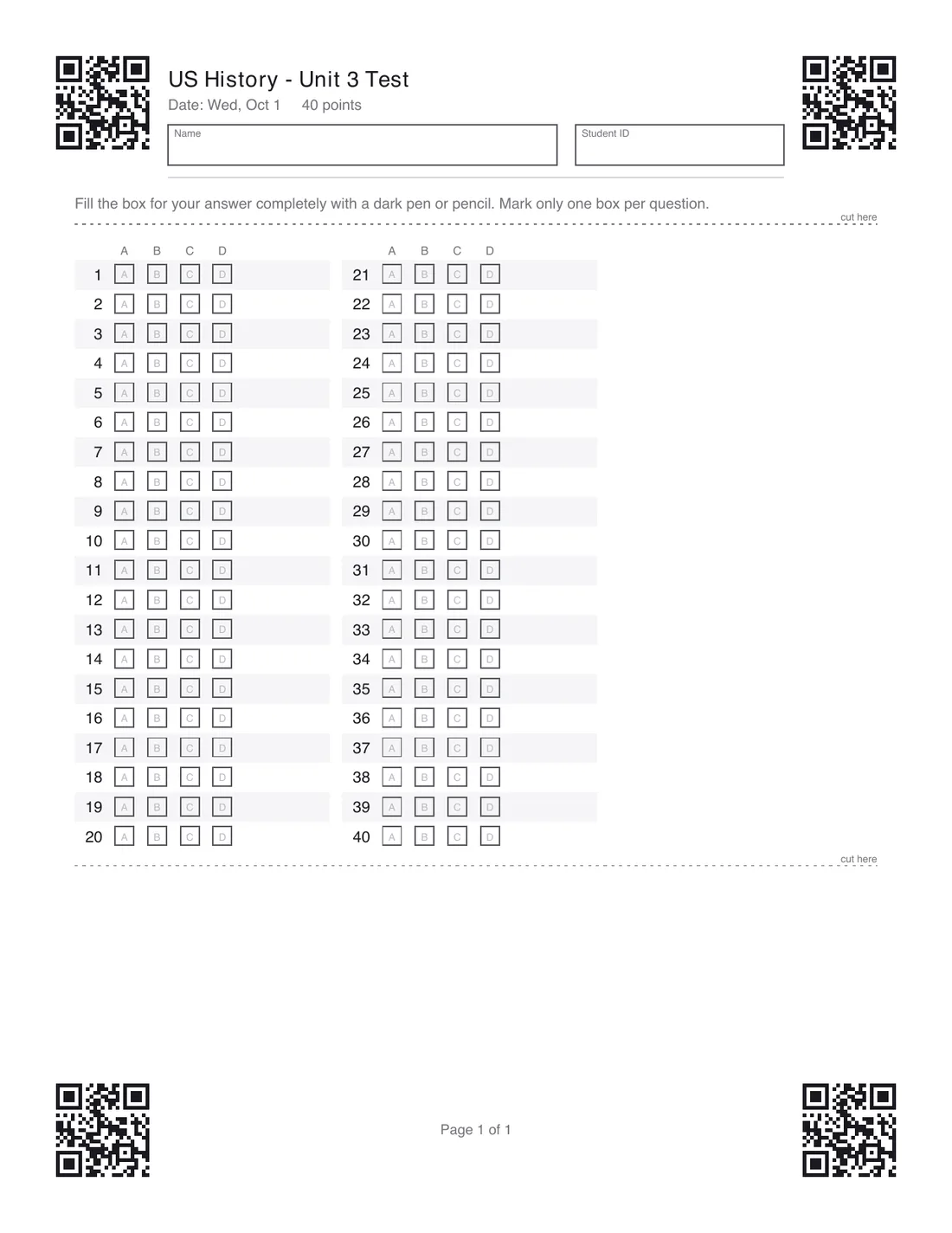
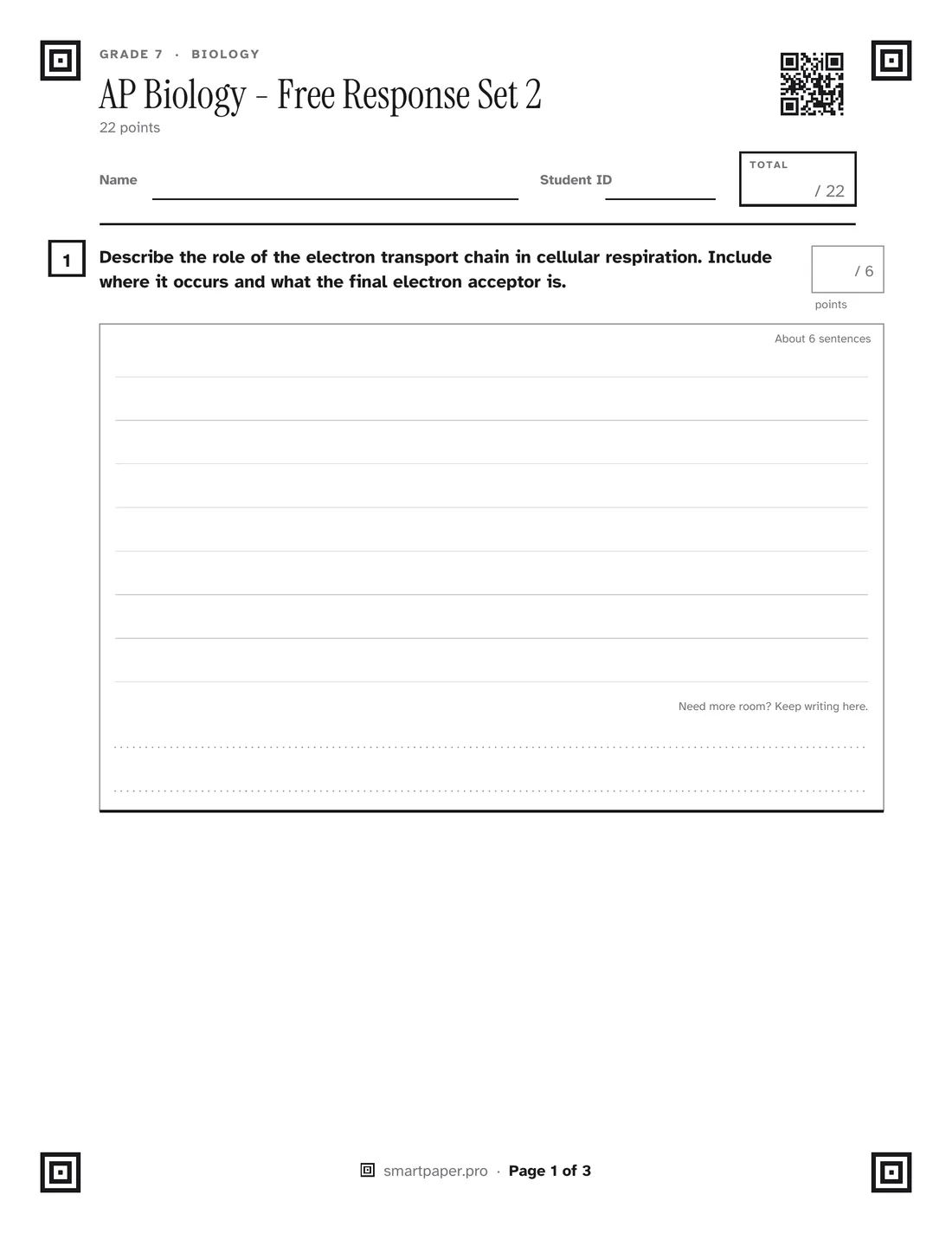
Type the questions, mark the answers, print. Each sheet carries a corner code and a name box.
 2
Scan the stack.
Phone. Between periods. Four minutes.
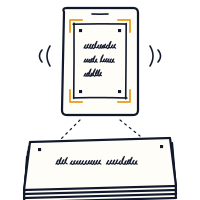
Hold your phone over the pile. Each page is captured, matched to a name and graded while you walk to class.
8 of 28
1 needs a name · fix later
 3
See what happened.
iPad or laptop. Saturday coffee. Fifteen minutes.
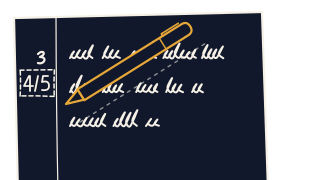
Who's done, who's missing, which question fell apart. Open a student: their handwriting beside a suggested score. Accept or change. Export.
 matched to roster · Question 3 · 3 points
Her answer

Feedback, in your voice
Right on the vertex, Emma, and you checked that it's a maximum. Next time say why you used −b/2a.
Suggested
- ✓ t = 1.25 s
- ✓ h = 31 ft
- ✓ notes a < 0
You stay the grader
We suggest.
You decide.
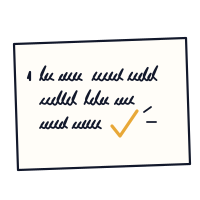
- Every score is a suggestion.
- The handwriting is always bigger than the suggestion.
- Accept with a tap, or change it.
- Only what you approve reaches the gradebook.
Who it is for
Clear the deck for the work that matters.
In a project-based school the quiz is the small part. Take it off your weekend.

- High school
- Exit tickets, chapter quizzes, unit tests. Scores go into your gradebook file for Canvas, Schoology or PowerSchool, or by last name for Google Classroom.
- College
- Blue books for sections of 60 to 300. One rubric, every TA. Graded by Monday.
The evidence
Handwriting is not nostalgia.

Students who took notes by hand showed better conceptual understanding than those who typed, even when the typists wrote more.
Across dozens of studies, reading comprehension was reliably higher on paper than on screens, and the gap has not closed with newer devices.
Writing by hand produced far more widespread brain connectivity in the patterns associated with learning and memory than typing the same words.
Built to be trusted
Four things a district asks first.
Built on Smart Paper by EdOptimize: 110 million pages graded in 65 countries. Rebuilt for US classrooms.
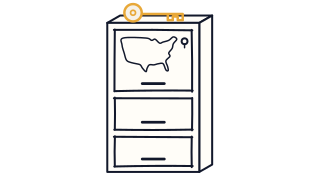
- Data stays in the US.
- Scans, scores and rosters, US regions only.
- Students have no account.
- Nothing to sign up for, nothing to sign away.
- FERPA and state law, by default.
- FERPA, New York Ed Law 2-d, California SOPIPA. No advertising.
- Your data leaves when you say.
- Export as CSV or PDF any time. Delete anything and it is gone.
Pricing
Paper is free.
Handwriting is the plan.
Paper quizzes and multiple-choice grading cost nothing. Pay when we read handwriting for you.
Full pricing and questionsFree
$0
forever, per teacher
Unlimited quizzes, classes and students. Printable sheets. Multiple-choice grading. CSV export.
Teacher
$12
per month
Everything in Free, plus handwritten answers read and scored against your key or rubric, with feedback in your voice.
Print one quiz this week.
If it doesn't give you back an evening, you've lost a sheet of paper.